The home of cut to size foam
 FAST DELIVERY
 Home
Home


Best Glue for Foam Sheets
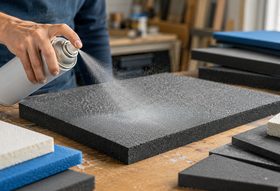
Foam sheets are used for everything from upholstery and packaging to crafts, sound treatment and insulation. Choosing the right adhesive matters because some glues can soak into soft foam, create a hard patch or damage the material altogether.
The best glue will depend on the type of foam, the surface it is being fixed to and whether the finished item needs to remain flexible.
What Is a Foam Sheet?
A foam sheet is a flat piece of material supplied in a chosen thickness. Flexible polyurethane foam is commonly used for upholstery and cushioning, while closed-cell foams are often selected for packaging, sealing, insulation and outdoor projects.
Different foam types react differently to adhesives. A product that works well on upholstery foam may not be the best choice for polyethylene, EVA or other closed-cell materials.
Which Adhesive Should You Use?
Foam-Safe Spray Adhesive
A foam-safe spray adhesive is often the most convenient option for bonding large, flat areas. It spreads evenly, is quick to apply and can remain flexible after curing. It is useful for joining foam to foam, fabric, wood and some other surfaces.
Always check that the label specifically lists your foam type. Solvent-heavy products can attack certain materials.
Contact Adhesive
Contact adhesive is applied to both surfaces and allowed to become tacky before they are pressed together. It can create a strong bond, but placement needs to be accurate because the surfaces may grip immediately.
Use only a product confirmed as suitable for the foam and substrate involved. Test a small offcut first.
Specialist Adhesive for Closed-Cell Foam
Closed-cell materials can be difficult to bond because their smooth surface gives ordinary glue less to grip. A specialist adhesive or surface preparation may be needed. Lightly abrading the bonding face can help in some applications, but follow the adhesive manufacturer's guidance.
Hot-Melt Glue
A low-temperature glue gun can be useful for small craft jobs. Standard hot glue may be too hot for some foams and can leave rigid lumps, so it is not usually the best choice for seating or large-area bonding.
PVA and General Craft Glue
PVA is easy to use, but it dries slowly and may not bond well to non-porous foam. It can be suitable for lightweight craft work involving absorbent surfaces, although it is rarely the strongest option for foam-to-foam joints.
How to Glue Foam Sheets Together
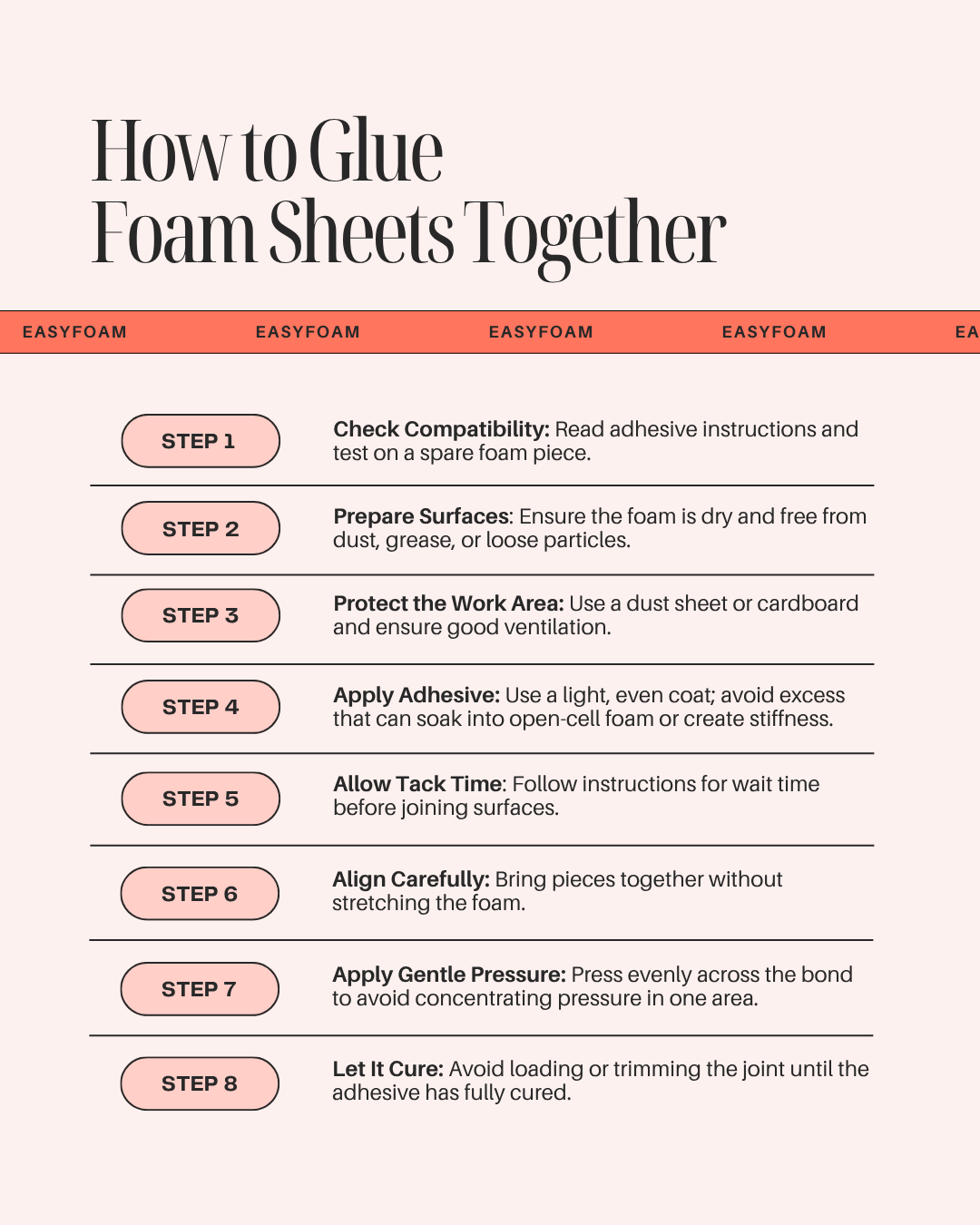
Check compatibility. Read the adhesive instructions and test it on a spare piece of foam.
Prepare the surfaces. Make sure the foam is dry and free from dust, grease and loose particles.
Protect the work area. Use a dust sheet or cardboard and provide good ventilation.
Apply a light, even coat. Too much adhesive can soak into open-cell foam or create a stiff area.
Allow the correct tack time. Some spray and contact adhesives need a short waiting period before the surfaces are joined.
Align carefully. Bring the pieces together without stretching the foam.
Apply gentle pressure. Press across the whole bond rather than crushing one small area.
Leave it to cure. Avoid loading or trimming the joint until the adhesive has reached a suitable strength.
Tips for a Neater Bond
Keep the adhesive slightly back from visible edges to reduce overspray. For thick cushions, join broad faces rather than relying on a narrow edge-to-edge seam. When attaching fabric, smooth it gradually to avoid creases and trapped air.
Never use an unknown solvent adhesive directly on foam. A quick test can prevent staining, melting or permanent damage.
EasyFoam supplies foam sheets and foam cut to size for upholstery, packaging, acoustic treatment and DIY projects. Once you know the materials being joined, our team can help you identify a practical bonding approach.