The home of cut to size foam
 FAST DELIVERY
 Home
Home


How to Build DIY Golf Simulator Wall Panels Using Foam
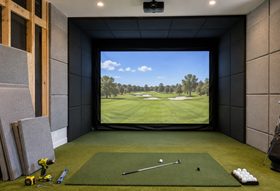
A home golf simulator is a brilliant way to practise, but not every shot reaches the impact screen. Side walls and nearby fittings can be struck by a ball travelling at considerable speed, so the room needs more than a decorative finish.
Foam wall panels can cushion selected surfaces, protect the room and reduce some of the echo created by repeated impacts. They should be used alongside a correctly installed impact screen, enclosure and safe room layout.
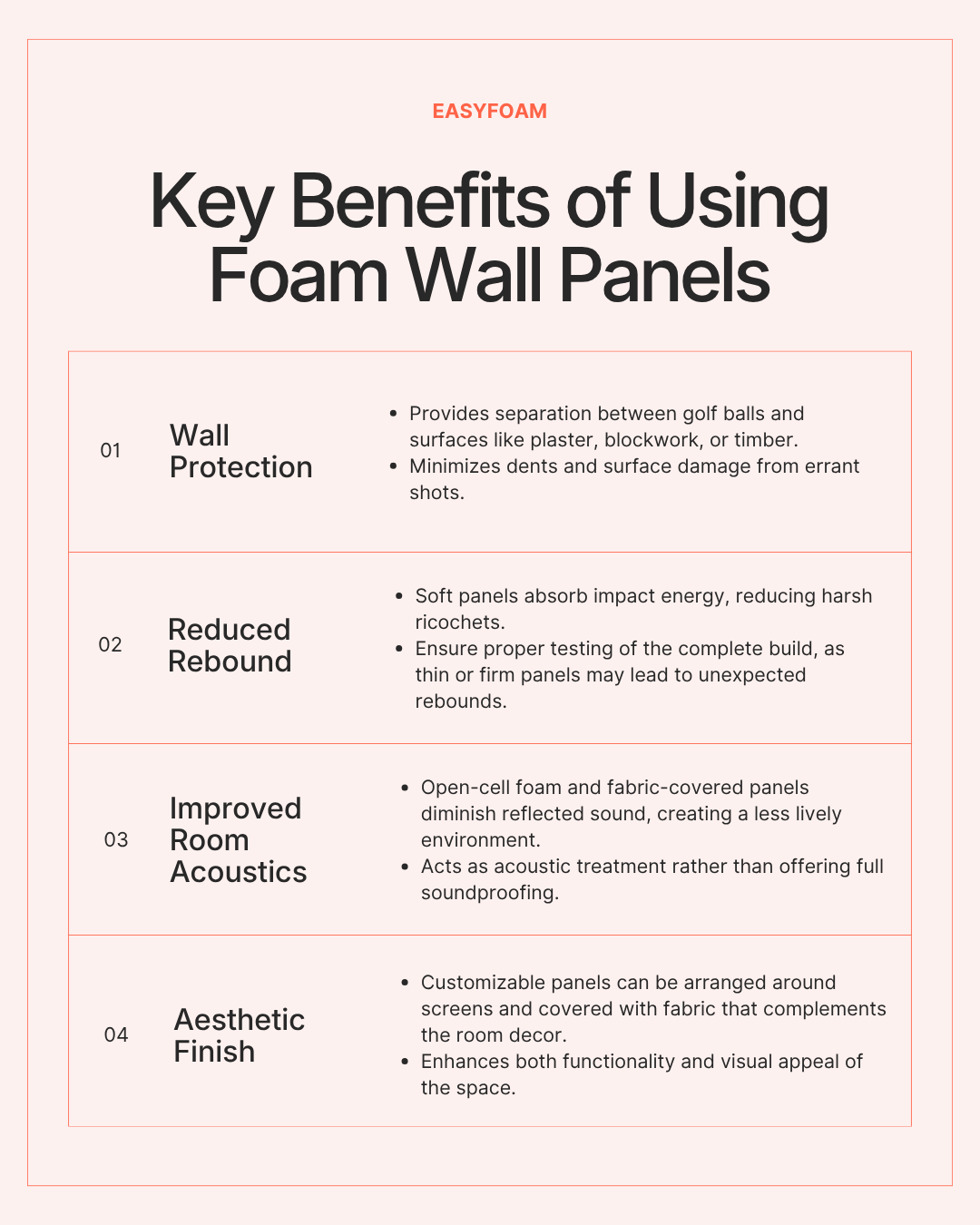
Why Use Foam Wall Panels?
Wall Protection
A padded panel creates separation between the golf ball and plaster, blockwork or timber. This can reduce dents and surface damage from mishit shots.
Reduced Rebound
A suitable soft panel can absorb some impact energy and reduce harsh ricochets. The complete build must still be tested because a thin or overly firm panel may allow the ball to bounce back.
Better Room Acoustics
Open-cell foam and fabric-covered panels can reduce reflected sound, making the simulator room less lively. This is acoustic treatment rather than full soundproofing.
A Neater Finish
Custom panels can be arranged around the screen and covered in a fabric that suits the room.
Choosing Foam for Golf Simulator Padding
Supportive polyurethane foam is a practical option for wall panels. It compresses under impact and can be cut to fit around corners and obstacles. A softer comfort layer may be added in some constructions, but memory foam alone can recover slowly and is not always the best structural choice.
Closed-cell EVA or polyethylene foam is tougher and more resistant to marking, but it is also firmer. It may be useful for lower wall sections or edge protection, provided the rebound is tested.
Consider:
- foam thickness
- firmness and recovery
- expected ball speed and impact angle
- the rigidity of the backing board
- the cover fabric
- fire performance and room ventilation
No foam panel should be described as completely bounce-free without testing the actual construction.
Materials and Tools
- foam sheets cut to the panel sizes
- plywood or OSB backing boards, if removable rigid panels are required
- durable, slightly flexible covering fabric
- polyester wadding, if a softer edge is wanted
- foam-safe spray adhesive
- staple gun and suitable staples
- screws, battens or mounting hardware
- tape measure, straight edge and marker
- sharp knife or electric foam cutter
- eye protection and appropriate work gloves
How to Build the Panels
1. Plan the Coverage
Identify the areas most likely to be struck, including the side walls close to the screen and any exposed framework. Keep vents, sockets and access panels clear.
2. Measure Accurately
Divide the wall into manageable panel sizes. Smaller panels are easier to cover and replace if one becomes damaged.
3. Cut the Backing Boards
Cut each board square and smooth the edges. Mark its position on the wall before adding foam.
4. Attach the Foam
Use an adhesive confirmed as suitable for both the foam and the board. Apply it evenly and allow the recommended tack and curing time.
5. Add the Cover
Lay the fabric face down, place the padded board on top and pull the fabric evenly around the back. Staple from the centre outwards, keeping the front smooth without over-compressing the foam.
6. Mount Securely
Use fixings suitable for the wall and panel weight. Avoid exposed metal edges in the hitting area. Panels must not be able to fall when struck.
7. Test Gradually
Begin with low-speed shots and observe the impact and rebound. Increase speed only after confirming that the panels, fixings and enclosure behave safely.
Extra Safety Tips
Keep sufficient distance between the golfer and every wall. Protect ceilings and hard floor edges where a ball could reach them. Never place ordinary household glass, mirrors or fragile fittings in the simulator area.
EasyFoam can supply foam cut to the dimensions required for wall panels and protective pads. Accurate measurements make the covering and installation much easier.