The home of cut to size foam
 FAST DELIVERY
 Home
Home


The Role of Foam in Modern Branding and Marketing
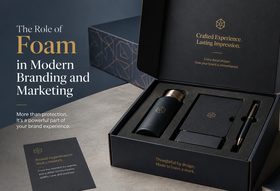
Branding is not limited to a logo on a box. The way a product is presented, protected and handled all contributes to the customer's impression of a business.
Foam is a practical material for this because it can be cut, layered, coloured and shaped into packaging inserts, display pieces and promotional products. It combines visual presentation with a useful protective function.
Why Foam Works Well for Branding
It Can Be Custom-Cut
A precise insert holds products in an intentional layout. This immediately looks more organised than loose void fill and can make an unboxing experience feel considered.
It Protects the Product
Good presentation has little value if the product arrives damaged. Foam can cushion delicate surfaces and keep components separated.
It Supports Repeated Use
Durable case inserts and display pieces may be used at exhibitions, demonstrations and sales meetings many times.
It Offers Design Flexibility
Different colours, textures and profiles can be combined to suit the product and brand style.
Creative Uses of Foam in Marketing
Custom Packaging Inserts
Cut-outs can present a product, accessories and instructions in a clear arrangement. Finger recesses and contrasting layers make the contents easier to remove and check.
Flocked Foam
A soft, velvet-like surface can give presentation packaging a premium appearance while reducing direct contact with delicate finishes.
Printed or Embossed Details
Depending on the material and process, inserts may carry printed messages, labels or branded overlays. A clean design is usually more effective than covering every surface with information.
Displays and Signage
Foam board and PVC foam board products are used for lightweight signs, exhibition graphics and display panels. Three-dimensional lettering and props can create depth without the weight of solid materials.
Promotional Products
Foam can be turned into seat pads, kneeling mats, educational shapes, protective sleeves and other useful items. The product should be relevant to the audience rather than chosen simply because it can carry a logo.
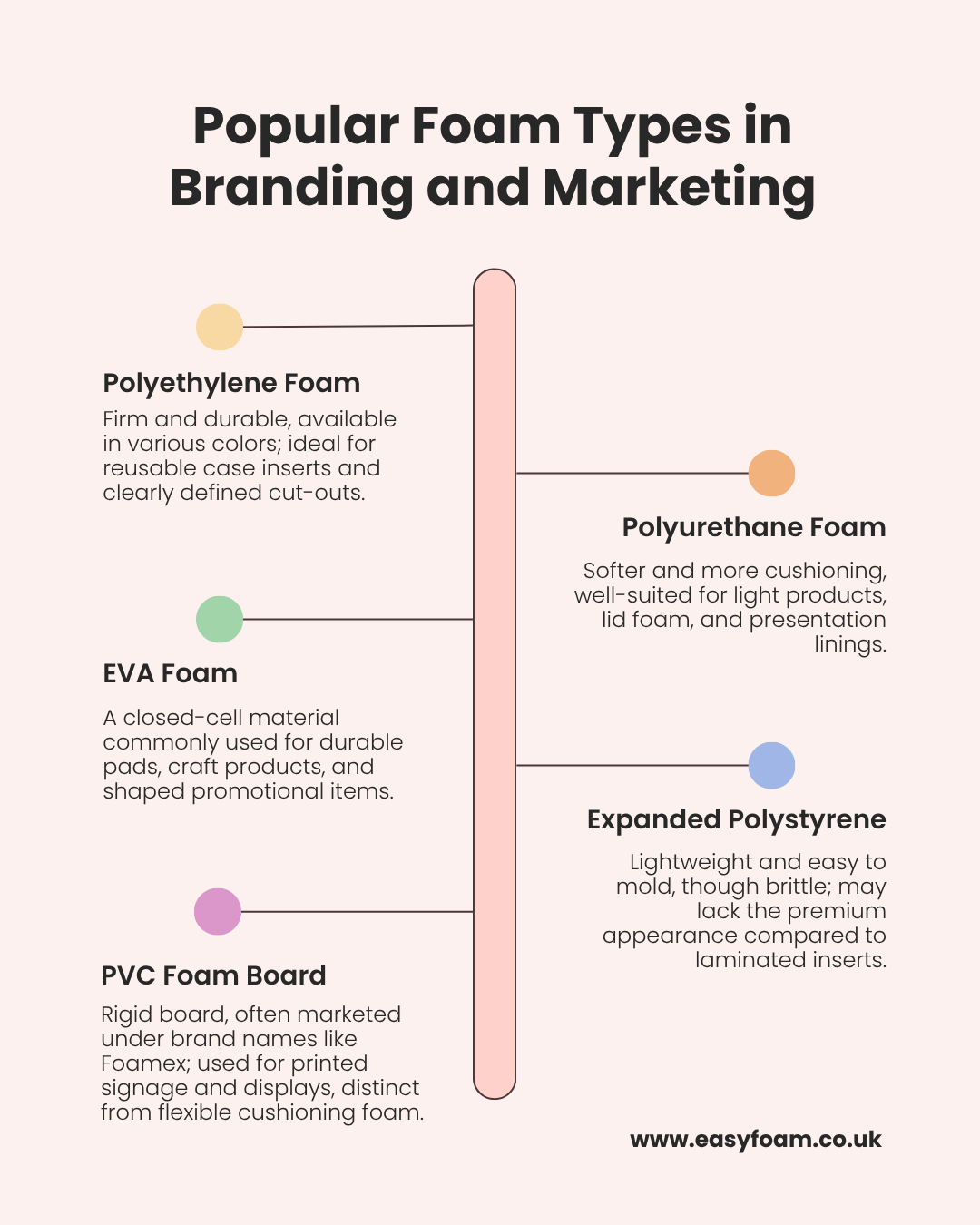
Popular Foam Types
Polyethylene Foam
Firm, durable and available in several colours. It is widely used for reusable case inserts and clearly defined cut-outs.
Polyurethane Foam
Softer and more cushioning. It works well for light products, lid foam and presentation linings.
EVA Foam
A closed-cell material commonly used for durable pads, craft products and shaped promotional items.
Expanded Polystyrene
Lightweight and easy to mould in volume, although it can be brittle and may not create the premium appearance of a laminated insert.
PVC Foam Board
Often known by brand names such as Foamex, this rigid board is used for printed signage and displays. It is not the same material as flexible cushioning foam.
Supporting More Sustainable Branding
Sustainability claims should be specific and honest. A reusable insert may reduce repeated use of disposable packaging, while an accurately sized pack can prevent product damage and unnecessary material.
Design components so they can be separated, reused or replaced individually. Avoid describing a foam as biodegradable or recyclable without evidence for that exact product and a realistic collection route.
Choosing Foam for a Brand Project
Consider the product weight, surface sensitivity, number of uses, delivery method and desired appearance. A bright display insert may be ideal for a presentation case, while a dark, firm foam may better suit professional tools.
Prototype the layout before ordering a full quantity. Check that every item can be removed easily and that the insert survives normal handling.
EasyFoam can supply foam sheets and custom-cut shapes for packaging, displays and promotional projects. The strongest branding solutions normally start with a practical purpose and use design to make that function memorable.