The home of cut to size foam
 FAST DELIVERY
 Home
Home


Indoor Foam Playgrounds for Children: Safety and Fun
Indoor play areas give children space to climb, crawl and explore whatever the weather. They also need careful planning. Flooring, padding, equipment layout and supervision all work together to reduce avoidable injuries.
Foam is commonly used because it creates a softer surface and can be shaped around walls, posts and equipment. It should still be chosen as part of a complete safety plan rather than treated as a substitute for suitable design and supervision.
Why the Play Environment Matters
Children move unpredictably and may not recognise hazards that an adult would avoid. A safe layout should provide clear routes, separate activities for different age groups and keep hard edges away from likely fall areas.
Regular inspection is equally important. A well-designed space can become unsafe if flooring separates, covers tear or damaged equipment remains in use.
Why Flooring Is Essential
A hard floor offers little cushioning when a child trips or falls. Suitable playground flooring can soften everyday impacts, improve grip and make the area more comfortable for crawling and floor-based play.
The floor must match the activity. A thin foam mat may be suitable for quiet play but not for elevated equipment or gymnastic movements. Where a specific fall height is involved, use a tested system designed for that purpose.
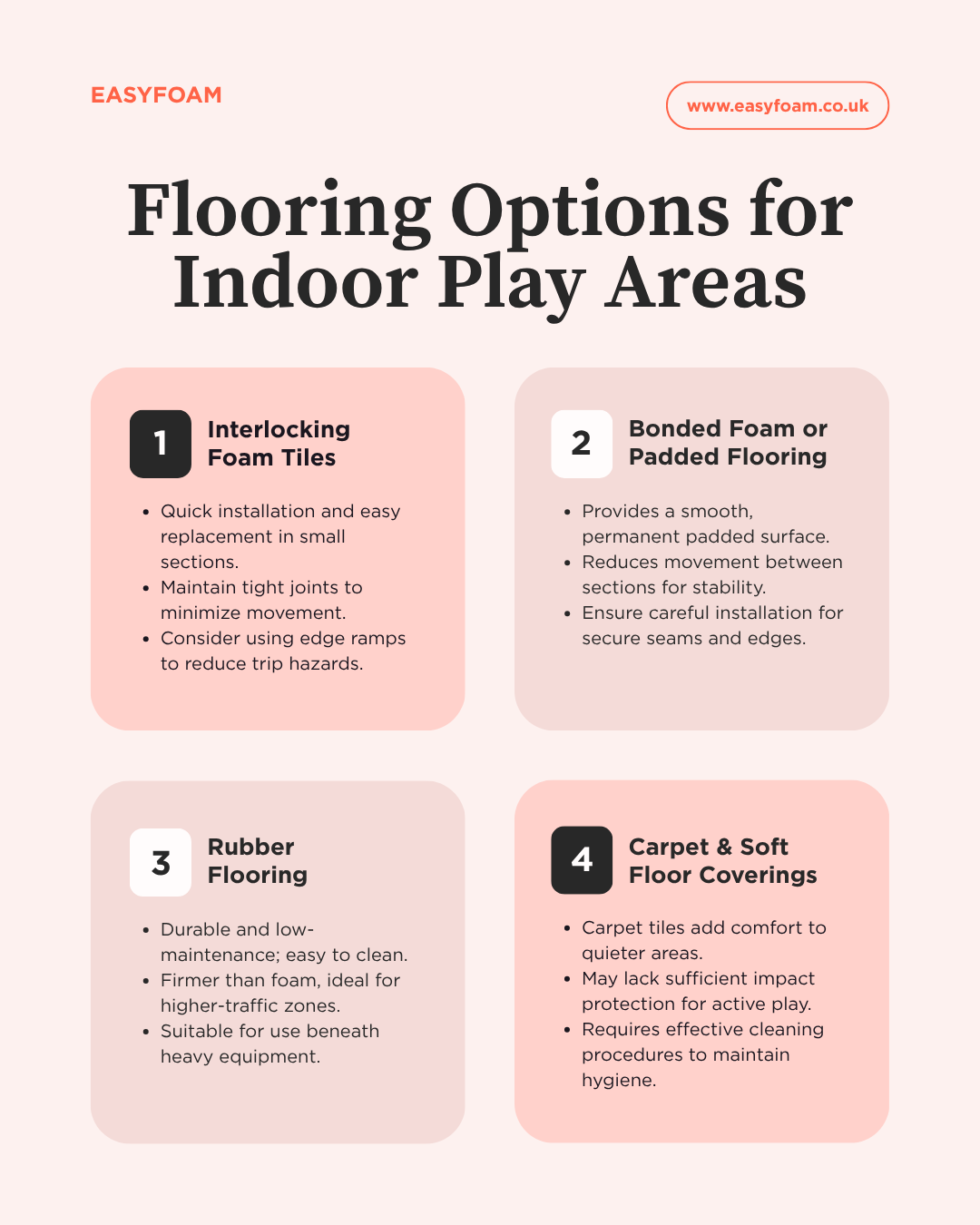
Flooring Options for Indoor Play Areas
Interlocking Foam Tiles
These are quick to install and easy to replace in small sections. Joints must remain tight, and edge ramps may be needed to reduce trip points.
Bonded Foam or Padded Flooring
A more permanent padded surface can provide a smooth finish and reduce movement between sections. Installation should be carried out carefully so that seams and edges remain secure.
Rubber Flooring
Rubber can be durable and easy to clean. It is often firmer than soft foam and may be chosen for higher-traffic zones or beneath certain equipment.
Carpet and Soft Floor Coverings
Carpet tiles can make quiet areas feel comfortable, but they may not offer enough impact protection for active play. They also require good cleaning procedures.
Why Foam Is a Popular Choice
Foam is lightweight, cushioning and available in different thicknesses and firmness levels. It can be used for floor mats, wall pads, column protectors and soft-play shapes.
It also offers practical design flexibility. Colours and shapes can help define zones, create simple games or make a room more inviting.
Choosing Foam for an Indoor Playground
Consider:
- the age and number of children using the space
- the height and type of equipment
- whether the foam needs a wipe-clean cover
- fire-performance requirements for the premises
- slip resistance and stability
- cleaning products and maintenance routines
- the risk of children picking at exposed edges
Foam density alone does not determine whether a surface is safe. Thickness, construction and the complete installed system all matter.
Maintenance and Safety Tips
Inspect the area before each session. Look for separated tiles, torn covers, exposed fixings, compressed foam and wet or contaminated surfaces.
Clean materials according to the manufacturer's instructions and allow them to dry fully. Do not use harsh chemicals unless compatibility has been confirmed. Damaged sections should be removed from use until repaired or replaced.
Keep emergency exits, heaters, sockets and ventilation routes clear. Equipment should be secured as intended and age limits should be visible to staff and carers.
Creating a Practical Play Space
Use softer materials where children are most likely to sit, crawl or fall, while maintaining clear walkways for adults. Avoid overcrowding the room with equipment. Open space often supports safer and more imaginative play.
EasyFoam can supply foam cut to size and shape for padded panels, play features and protective applications. For commercial or public play areas, always confirm that the complete design, materials and installation meet the requirements that apply to the premises.