 The home of cut to size foam
 FAST DELIVERY
 Home
Home


Mattress Layers Explained: Your Guide to Unlocking Sleep Comfort
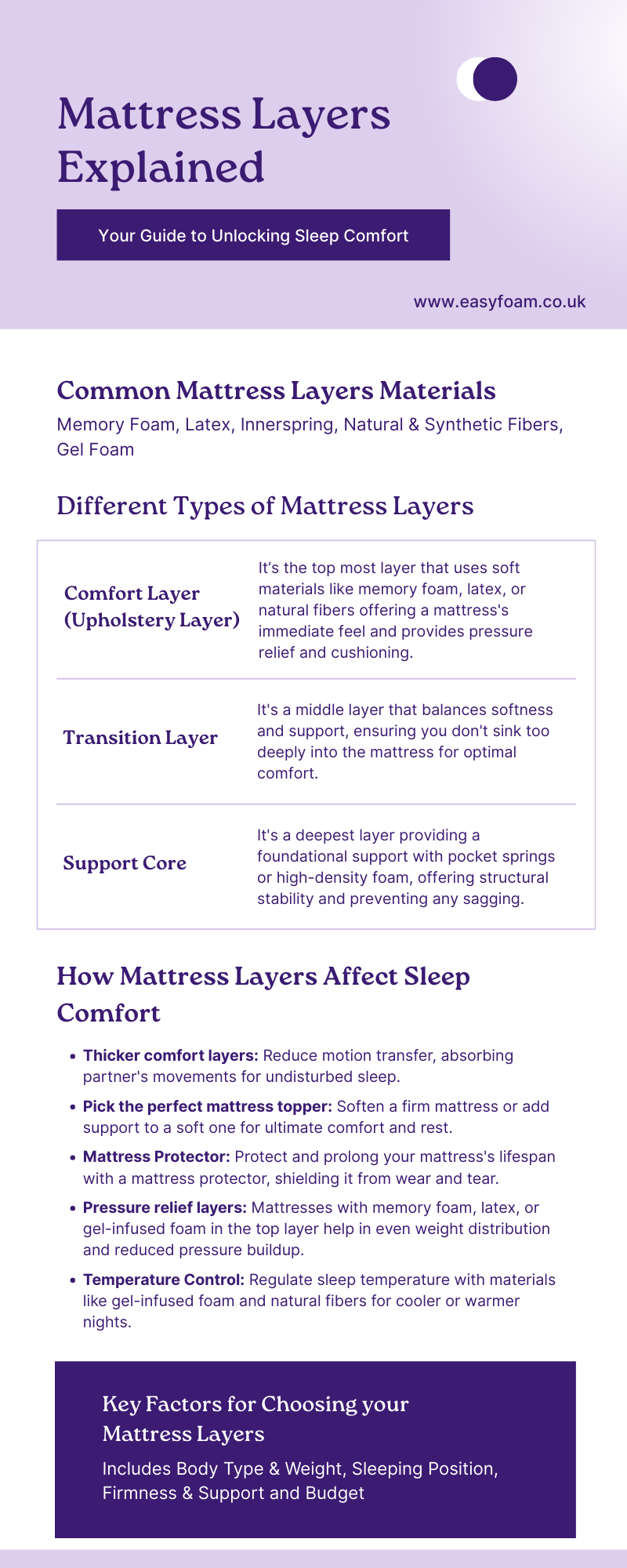
Every mattress is really a stack of layers working together, and understanding what each layer does is the key to choosing a bed that suits how you sleep. This guide breaks down the different types of mattress layers, the materials used in them, and the factors to weigh up before you buy, all summarised in the infographic below.
Different types of mattress layers
Comfort layer (upholstery layer)
The topmost layer uses soft materials like memory foam, latex or natural fibres, offering the mattress's immediate feel and providing pressure relief and cushioning.
Transition layer
The middle layer balances softness and support, ensuring you don't sink too deeply into the mattress for optimal comfort.
Support core
The deepest layer provides foundational support with pocket springs or high-density foam, offering structural stability and preventing sagging.
Common mattress layer materials
The materials most often found in mattress layers are memory foam, latex, innerspring, natural and synthetic fibres, and gel foam. Many mattresses combine several of these to balance comfort, support and temperature.
How mattress layers affect sleep comfort
- Thicker comfort layers: reduce motion transfer, absorbing a partner's movements for undisturbed sleep.
- Pick the perfect mattress topper: soften a firm mattress or add support to a soft one for ultimate comfort and rest.
- Mattress protector: protect and prolong your mattress's lifespan with a protector, shielding it from wear and tear.
- Pressure relief layers: mattresses with memory foam, latex or gel-infused foam in the top layer help with even weight distribution and reduced pressure build-up.
- Temperature control: regulate sleep temperature with materials like gel-infused foam and natural fibres for cooler or warmer nights.
Key factors for choosing your mattress layers
- Body type and weight: heavier individuals need thicker support, while lighter sleepers enjoy softer options.
- Sleeping position: softer layers suit side sleepers, while firmer support suits back or stomach positions.
- Firmness and support: mattress firmness affects feel (soft to firm), while support ensures spinal alignment. Both soft and firm mattresses can offer proper support.
- Budget: premium mattresses with cooling layers or materials like natural fibres come at a higher price for unmatched comfort and quality.
If your current mattress has a tired comfort layer, you don't always need a whole new bed. EasyFoam supplies UK-made foam mattresses and pillows, memory foam toppers to refresh an existing mattress, and foam cut to size for caravans, boats and custom beds. For advice on the right layers for your sleep, contact our team.