The home of cut to size foam
 FAST DELIVERY
 Home
Home


Best Practices for Packing Your TV with Foam Materials
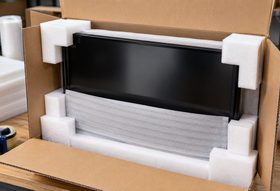
Televisions are awkward to move. They are large, relatively thin and easily damaged by impact, pressure or twisting. Good packaging must protect the screen, support the frame and stop the television moving inside its box.
Foam is particularly useful because it can cushion shocks without adding excessive weight. The key is to choose the right type and use it in the correct places.
Why Use Foam When Packing a Television?
Foam creates separation between the television and the outer box. This helps absorb knocks and vibrations during handling or transport. It can also be cut to make corner blocks, edge protectors and inserts that hold the television in position.
A well-designed foam pack offers:
- lightweight but dependable protection
- cushioning against shocks and vibration
- support around vulnerable corners and edges
- a close fit that reduces movement
- reusable protection for future storage or transport
Useful Foam Materials for TV Packaging
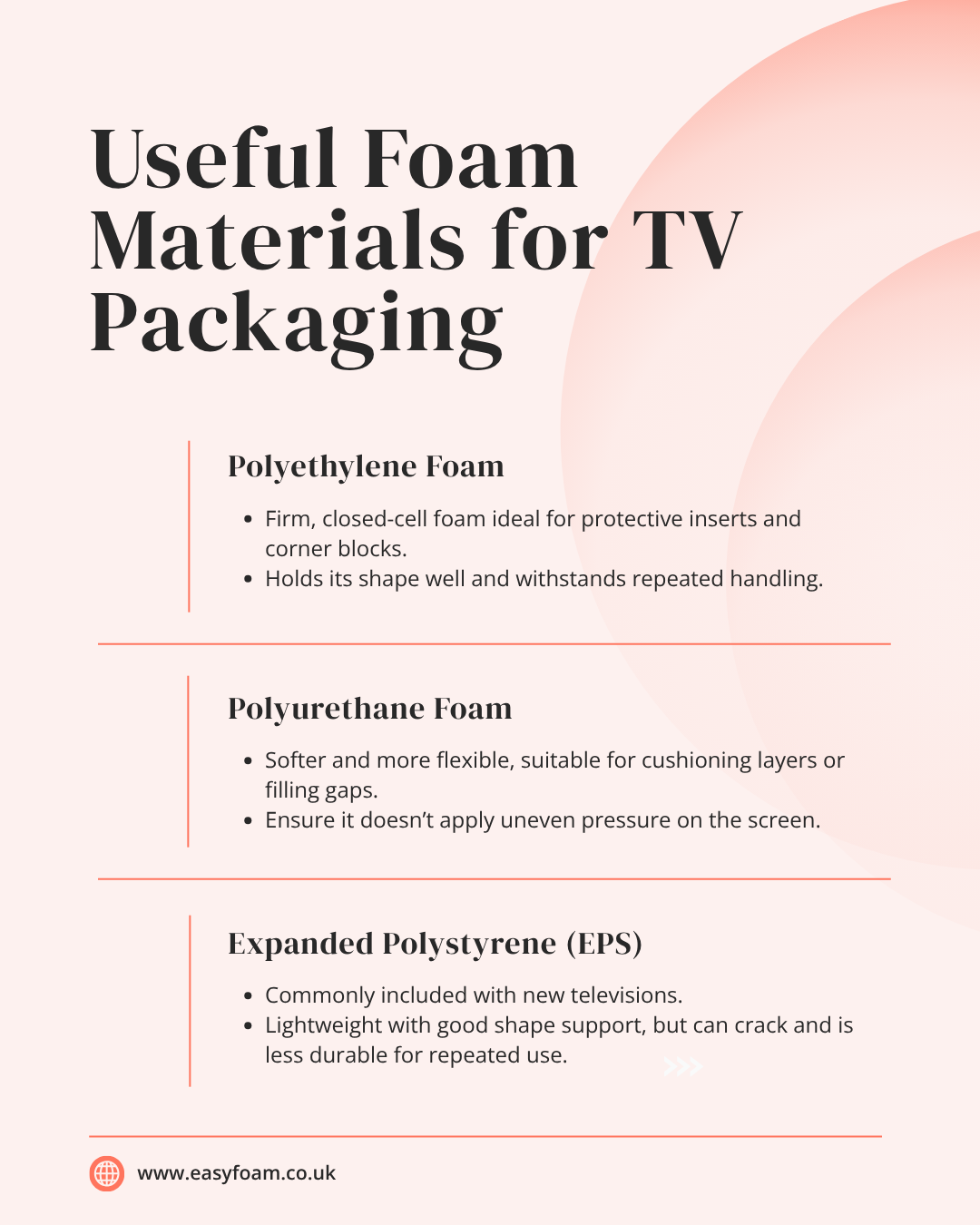
Polyethylene Foam
Polyethylene is a firm, closed-cell foam commonly used for protective inserts and corner blocks. It is useful where the packaging needs to hold its shape and cope with repeated handling.
Polyurethane Packaging Foam
Polyurethane foam is softer and more flexible. It can be used as a cushioning layer or to fill controlled gaps, although it should not place uneven pressure on the screen.
Expanded Polystyrene
Moulded expanded polystyrene is often supplied with new televisions. It is lightweight and provides good shape support, but it can crack and may be less convenient for repeated use.
Whichever material you choose, make sure it is clean, dry and thick enough for the weight of the television.
What You Will Need
- the original TV box or a strong double-wall carton
- a screen cover, soft cloth or clean foam sheet
- foam corner and edge protection
- additional foam for controlled gap filling
- strong packing tape
- a separate bag or small box for the stand, remote and cables
Step-by-Step Packing Guide
1. Photograph and Disconnect the Television
Take a quick photograph of the cable connections before unplugging everything. Remove the power lead, HDMI cables and any accessories. Pack these separately so they cannot strike the screen.
2. Remove the Stand or Feet
Follow the manufacturer's instructions and place screws in a labelled bag. Do not tape metal parts directly to the television.
3. Protect the Screen
Place a clean, non-abrasive cover over the screen. The protective layer should be smooth and free from staples, grit or hard folds. Avoid putting adhesive tape directly on the television.
4. Fit Foam to the Corners and Edges
The frame and corners should carry the load, not the centre of the screen. Fit foam blocks securely around these areas. If you are cutting your own pieces, make them deep enough to keep the television away from every wall of the box.
5. Lower the TV into the Box Upright
Televisions should normally be kept upright rather than laid flat. Use two people for a large set. Make sure the foam stays correctly positioned as the television is lowered into the carton.
6. Fill Remaining Gaps
Add foam only where it prevents movement without pressing on the screen. Shake the box very gently; the television should not slide or rattle.
7. Seal and Label the Carton
Tape every opening securely. Mark the box as fragile and show which way it should remain upright. Labels help, but careful handling and good internal packaging are still essential.
Mistakes to Avoid
Do not pack cables against the screen, use loose hard objects as gap fillers or rely on a thin layer of bubble wrap alone. Avoid overfilling the box, as concentrated pressure can be as damaging as an impact.
If the original packaging is unavailable, custom-cut foam can create a much closer and more reliable fit than improvised household materials. EasyFoam can supply foam cut to the dimensions needed for protective blocks, pads and inserts.