The home of cut to size foam
 FAST DELIVERY
 Home
Home


Polyurethane Foam for Sports and Leisure
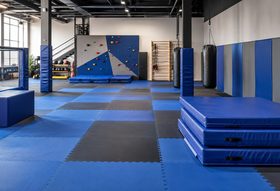
Foam is used throughout the sports and leisure sector because it can cushion impacts, improve comfort and be cut into a wide range of shapes. Flexible polyurethane foam, often shortened to PU foam, is one of the most familiar materials in this area.
You will find it inside protective pads, gym equipment, landing products, seating and many other items. The exact grade must always match the application, as not every polyurethane foam is suitable for high-impact or safety-related use.
What Is Polyurethane Foam?
Flexible polyurethane foam is an open-cell material made in a range of densities and firmness levels. Air can move through its cellular structure, allowing it to compress under load and recover afterwards.
Its performance can be adjusted during manufacture, which is why one PU foam may feel soft and cushioning while another is considerably firmer and more supportive.
Common Sports and Leisure Uses
Polyurethane foam may be used in:
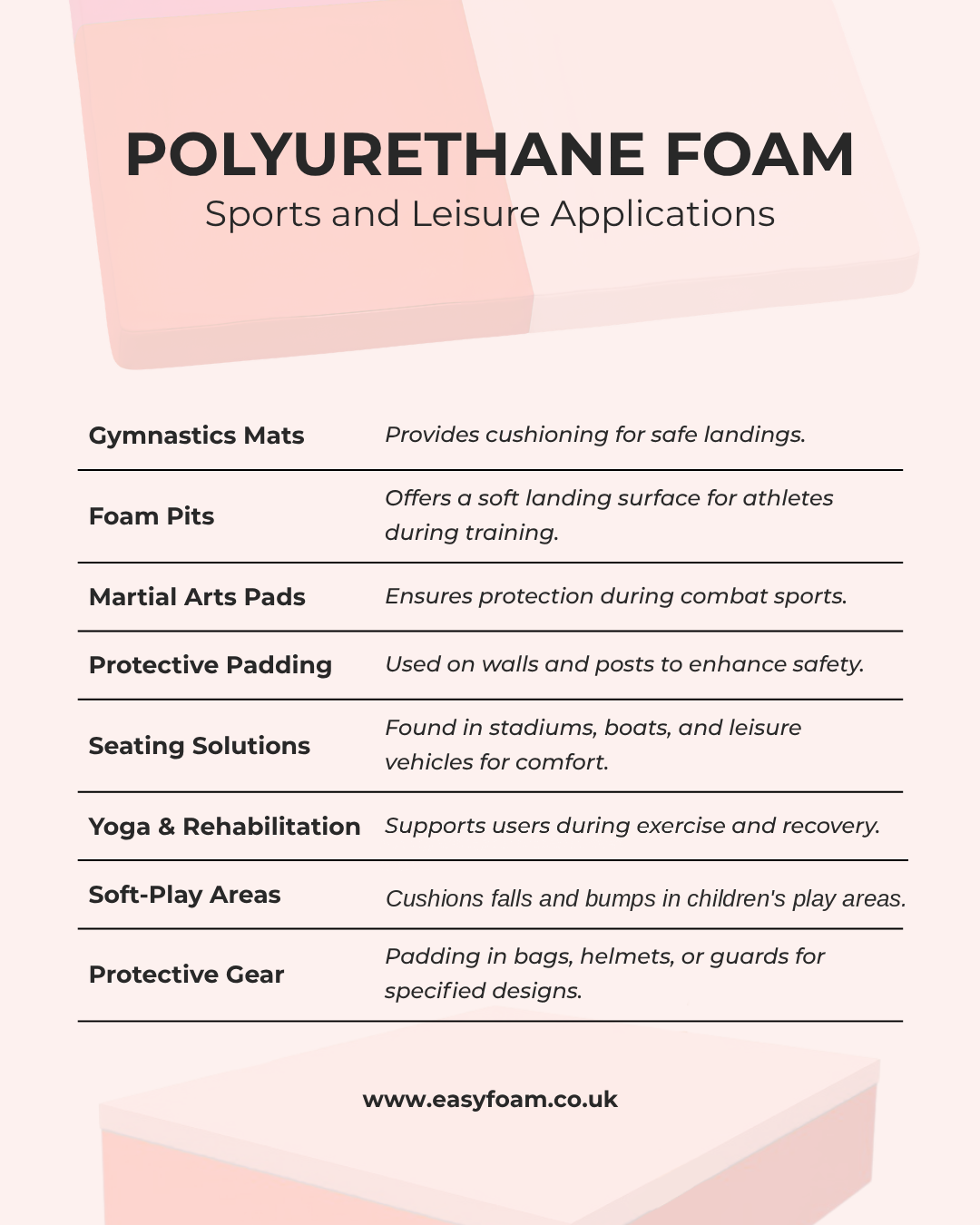
- gymnastics mats and padded equipment
- foam pits and loose training blocks
- martial arts and combat-sport pads
- protective wall and post padding
- seating for stadiums, boats and leisure vehicles
- yoga, exercise and rehabilitation products
- soft-play shapes and indoor activity areas
- padding inside bags, helmets or guards where a specified design allows it
Safety-critical equipment should be designed and tested as a complete product. A piece of foam alone does not guarantee a particular level of protection.
How Strong Is Polyurethane Foam?
Strength depends on the grade, thickness and construction. Flexible PU foam is designed to compress rather than behave like a rigid structural material. A denser or firmer grade may support higher loads, but it can also feel harder on impact.
For repeated compression, resilience and recovery are particularly important. Foam that remains flattened will gradually provide less cushioning.
How Long Does It Last?
Service life varies widely. Frequent impacts, heavy loads, UV exposure, moisture, heat and poor storage all speed up wear.
Replace foam when it develops permanent dips, cracks, crumbling edges or a noticeable loss of support. Covers should be opened periodically where possible so the filling can be inspected.
Is Polyurethane Foam Weather-Resistant?
Standard open-cell polyurethane foam is not the first choice for permanent outdoor exposure. It can absorb water and may dry slowly if enclosed in an unsuitable cover.
Outdoor furniture and marine seating often use reticulated quick-drain foam or a suitable closed-cell material instead. Where conventional PU foam is used outdoors, it should be protected by an appropriate cover and stored dry.
Is It Waterproof?
Most flexible upholstery-type polyurethane foam is not waterproof. Its open cells allow liquid to enter.
A waterproof or water-resistant cover can protect the foam, but seams, zips and ventilation must be designed carefully. Trapped moisture can lead to odour, staining and deterioration.
Choosing Foam for a Sports Project
Consider the type of impact, user weight, foam thickness, expected frequency of use and whether the product will be indoors or outdoors. Fire-performance requirements may also apply in gyms, schools and public buildings.
A landing mat, wall pad and seat cushion should not all use the same foam simply because they are in the same facility.
Looking After Sports Foam
Keep covers clean and repair tears promptly. Allow damp products to dry completely, and store them away from heat, direct sunlight and sharp objects.
Inspect high-use equipment on a planned schedule rather than waiting for a visible failure.
EasyFoam supplies polyurethane foam in many grades and can cut it to size and shape. Tell our team how the foam will be used so the practical requirements can be considered before ordering.