The home of cut to size foam
 FAST DELIVERY
 Home
Home


Reticulated Foam for Outdoor Furniture
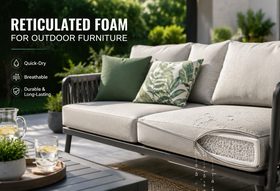
Outdoor cushions have to cope with conditions that ordinary indoor upholstery rarely faces. Rain, condensation and humidity can enter the cover, and a foam that holds water may take a long time to dry.
Reticulated foam is designed with a very open cellular structure, allowing water and air to move through it more freely. This makes it a popular choice for patio, poolside, marine and garden seating.
What Is Reticulated Foam?
Reticulated foam is an open-cell foam that has undergone a process to remove most of the thin membranes between its cells. The remaining network resembles a three-dimensional skeleton.
The large connected openings allow water to drain and improve airflow through the cushion. It is often described as quick-dry foam, although the cover, cushion design and weather still affect drying time.
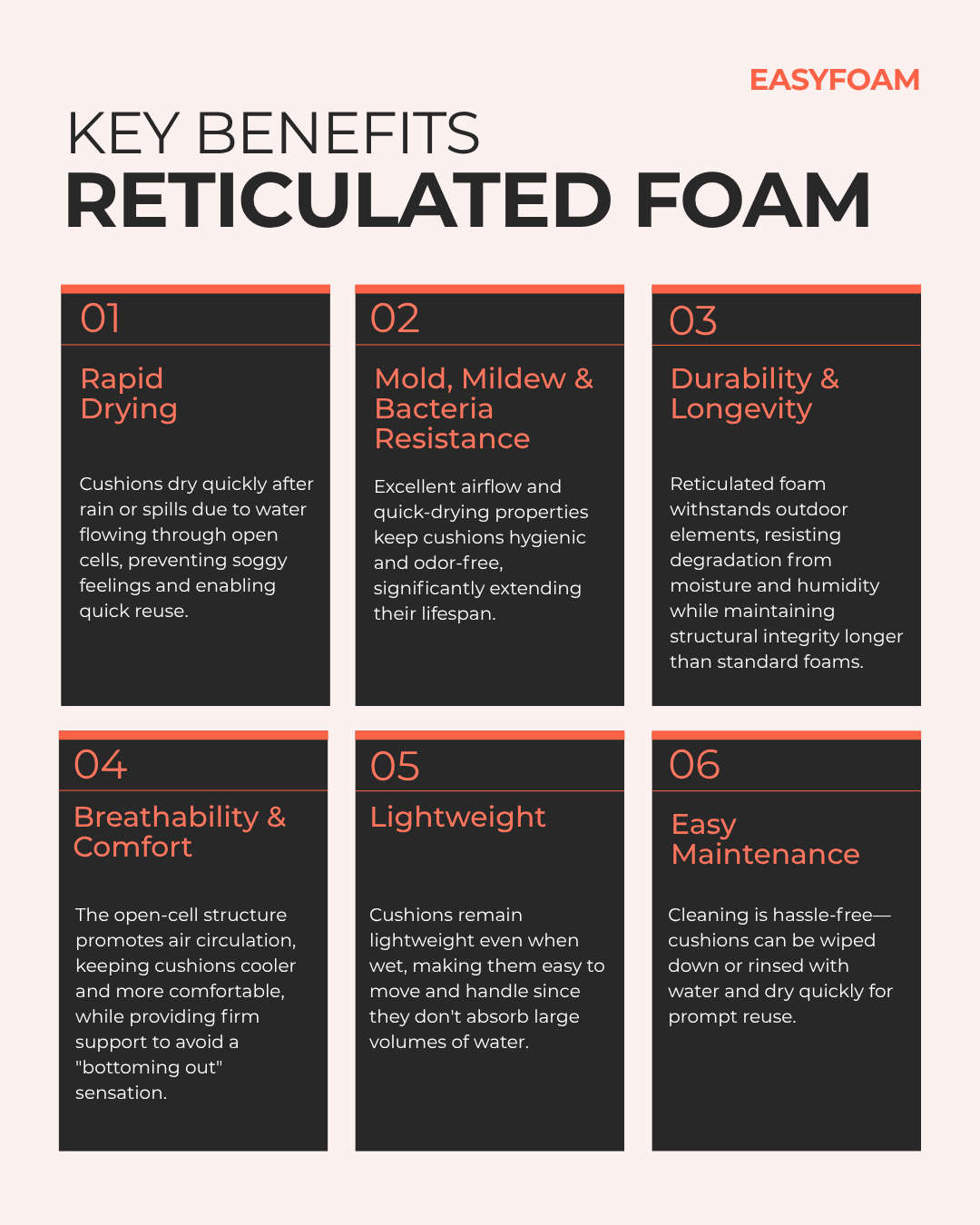
Benefits of Reticulated Foam
Faster Drainage
Water can pass through the foam instead of remaining trapped in small cells.
Improved Airflow
The open structure helps moisture evaporate, particularly when the cushion has a breathable base and is positioned where air can circulate.
Lower Water Retention
The foam does not become as heavily waterlogged as many conventional upholstery foams.
Suitable Cushioning
Reticulated grades are available in different firmness levels for seat and back cushions.
Useful for Marine and Poolside Areas
The material is frequently used where occasional soaking or spray is expected.
Is Reticulated Foam Comfortable?
Yes, when the grade and thickness are chosen correctly. Seat cushions need enough support to prevent the user feeling the furniture frame beneath. Back cushions can usually be softer.
As with any foam, a thin cushion will feel firmer than a deep cushion in the same grade.
Why Not Use Standard Upholstery Foam Outdoors?
Ordinary open-cell polyurethane foam can absorb water and dry slowly, particularly inside a water-resistant cover with limited ventilation. Prolonged dampness can lead to odour, staining and material deterioration.
A waterproof cover may stop most rain entering, but it can also trap condensation or water that reaches the foam through seams. Outdoor cushions benefit from a design that considers drainage as well as resistance.
How to Choose the Right Reticulated Foam
Three things matter most when specifying reticulated foam for outdoor cushions. Thickness should balance comfort and support for the seat in question, remembering that a thin cushion feels firmer than a deep one in the same grade. Density affects durability, with higher-density grades generally offering greater support and a longer life in regular use. Colour varies between manufacturers, so if the foam will be visible through a mesh panel, check what is available before ordering.
Choosing Covers for Quick-Dry Cushions
Use an outdoor fabric suited to the location. The underside may need a breathable mesh or drainage panel so water can leave the cushion.
Removable covers make cleaning and inspection easier. Zips should be positioned so they do not sit in standing water.
Where Reticulated Foam Is Used
- garden sofas and benches
- sun loungers
- boat cockpit and deck cushions
- poolside seating
- outdoor dining chairs
- spa and leisure furniture
- filtered or ventilated technical applications
Caring for Outdoor Foam Cushions
Stand wet cushions on an edge so they can drain. Keep air moving around them and avoid placing them directly into a sealed storage box while damp.
Clean the cover and foam according to the supplier's instructions. During winter or long periods of bad weather, dry the cushions fully and store them under cover.
Reticulated foam is weather-suitable rather than indestructible. UV exposure, dirt and constant damp conditions will still shorten its life.
EasyFoam can cut reticulated foam to the dimensions and shapes needed for outdoor cushions. Measure the finished covers carefully and allow for any wadding or mesh layers included in the design.